
Family lawns
Soft, realistic multi-tone turf for kids and bare feet, with no mowing, watering, or brown patches in August.
Artificial grass
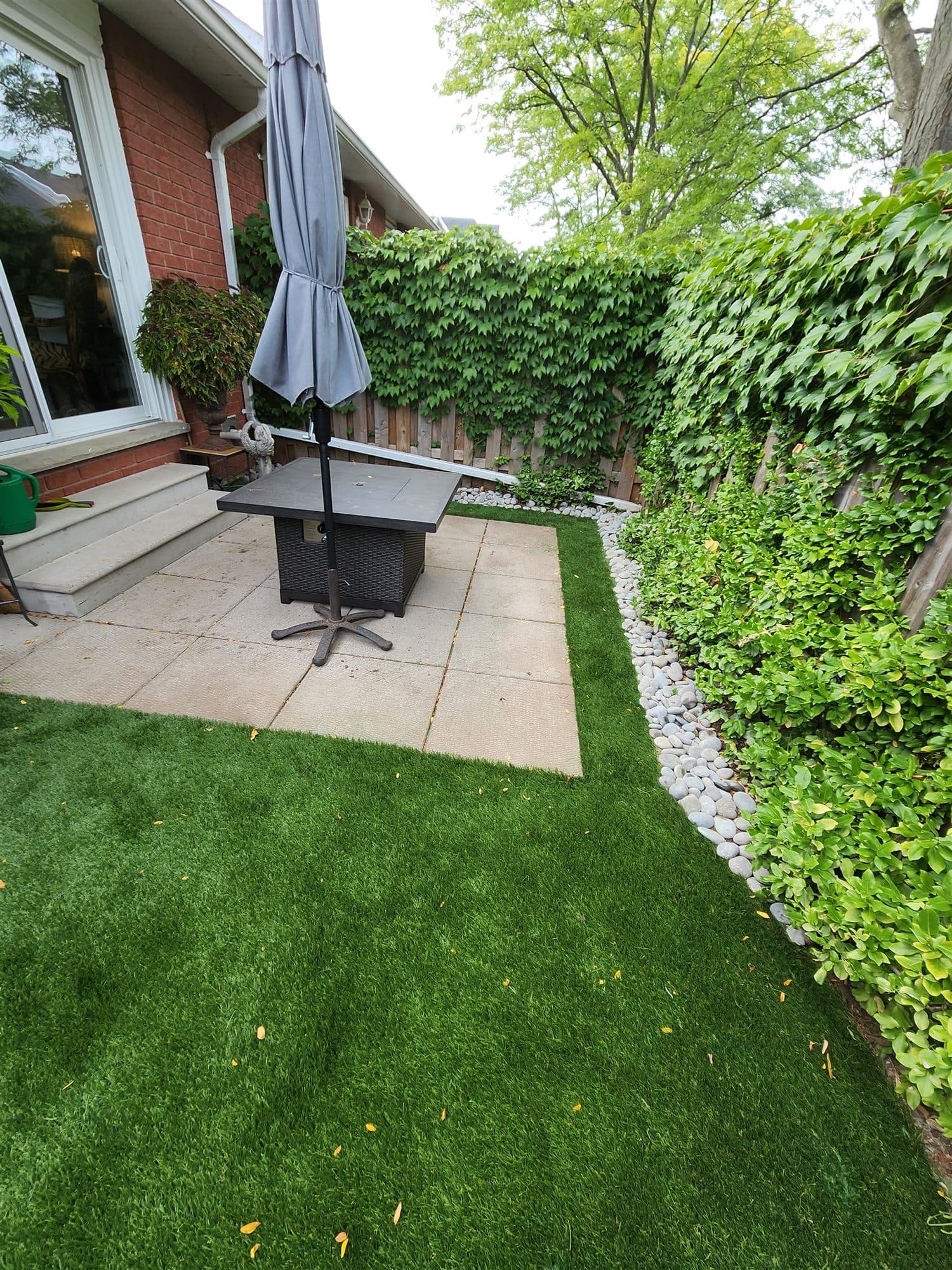
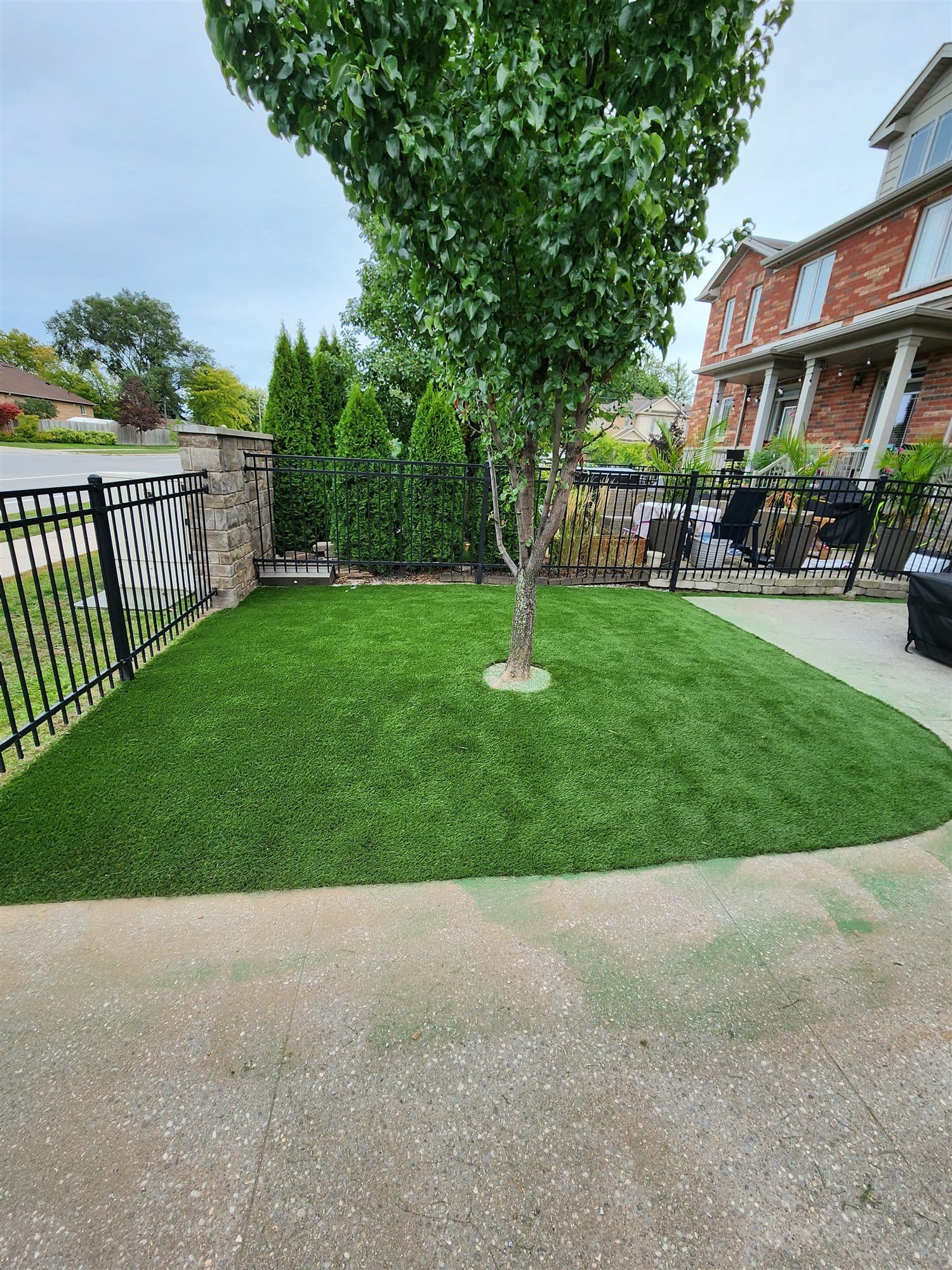
Artificial grass has quietly become one of the most practical upgrades for Toronto yards — small urban lots that real grass never loved, dog runs that turn to mud, and shaded side yards where nothing grows.
The product matters less than the installation: excavation, a properly compacted base, and drainage decide whether turf still looks right in year ten.
Typical planning ranges
Examples are for early planning only — not a quoted price. Pricing excludes demolition and removal of existing structures. Your range depends on the factors beside this list, and the project planner will give you a range for your specific space.
Project gallery
How it works
A photo and rough dimensions are enough for a realistic starting range — turf is the most predictable category we install.
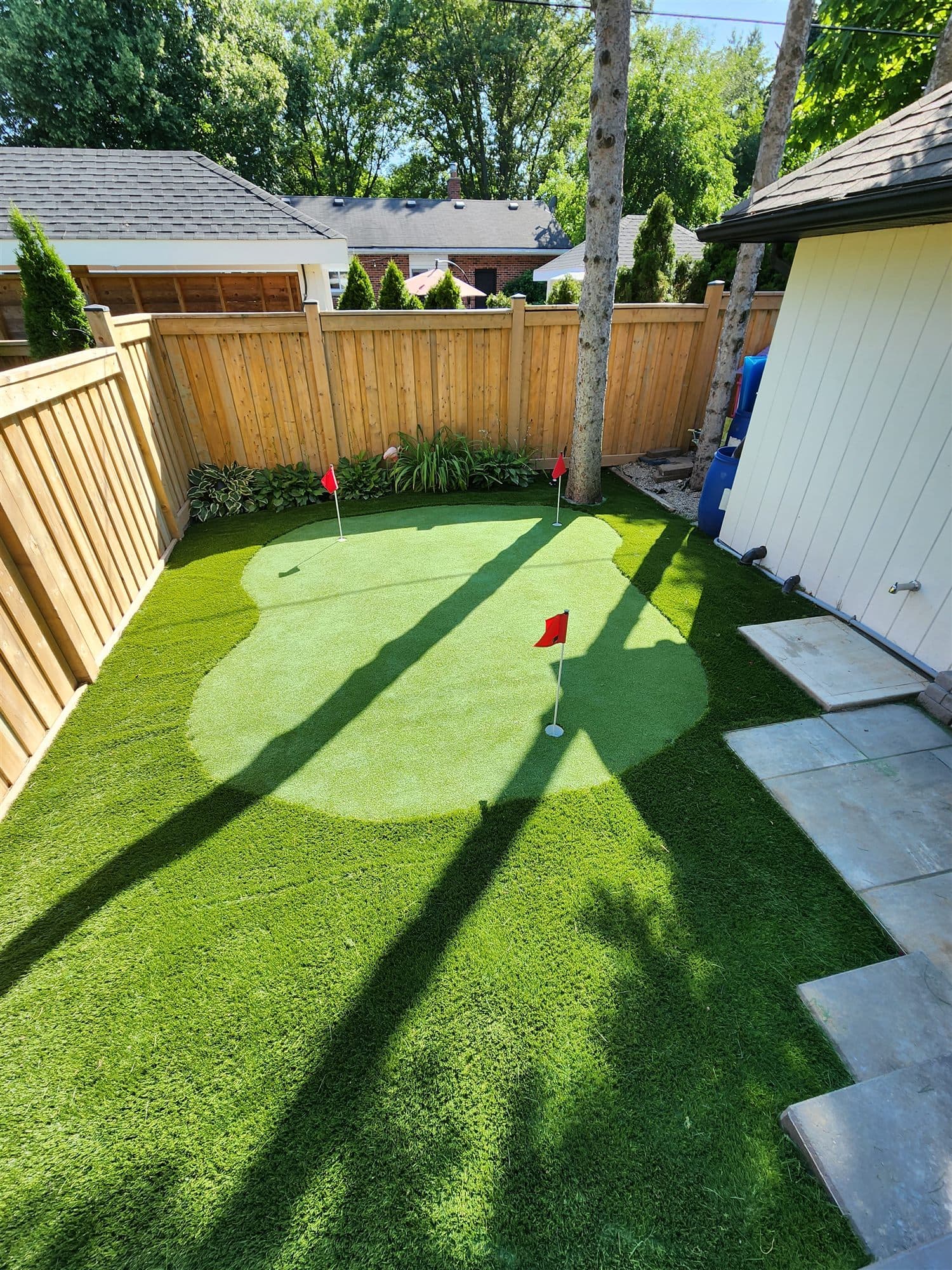
We check grades, drainage paths, access for excavation, and confirm the right system for pets, play, or putting.
Fixed pricing with the specific turf product, base depth, and drainage details in writing.
Most residential installations complete in one to three days, weather permitting.
Common questions
Quality turf drains through perforated backing into a compacted open-graded stone base, handling heavy rain faster than most natural lawns. Sites with poor grading get drainage corrections as part of the base work.
Pet systems pair fast-draining backing with antimicrobial infill so urine flushes through rather than sitting in the turf. An occasional rinse keeps things fresh even in a daily-use dog run.
Quality turf typically performs for 15–20 years. Fibres carry manufacturer warranties, and the base — done right — outlasts the turf itself, making eventual replacement much cheaper than the first installation.
Turf does run warmer than living grass in direct July sun. Lighter face colours, shade, and a quick rinse before barefoot play all help; it cools within minutes.
Yes — modern turf is lead-free and paired with clean infills. It's the same family of surfacing used under playgrounds, and it eliminates mud, pesticides, and lawn chemicals from the play area.
Ready to see it?
Upload a photo, tell us what you want, and receive AI concept directions with a preliminary planning range — before anyone visits your home.
Plan My Project